
Adventures in Australia's foodie capital
I checked out Melbourne's vibrant food scene, then went on the road to investigate world-class Chardonnay, Pinot Noir and more in the nearby cool-climate wine regions


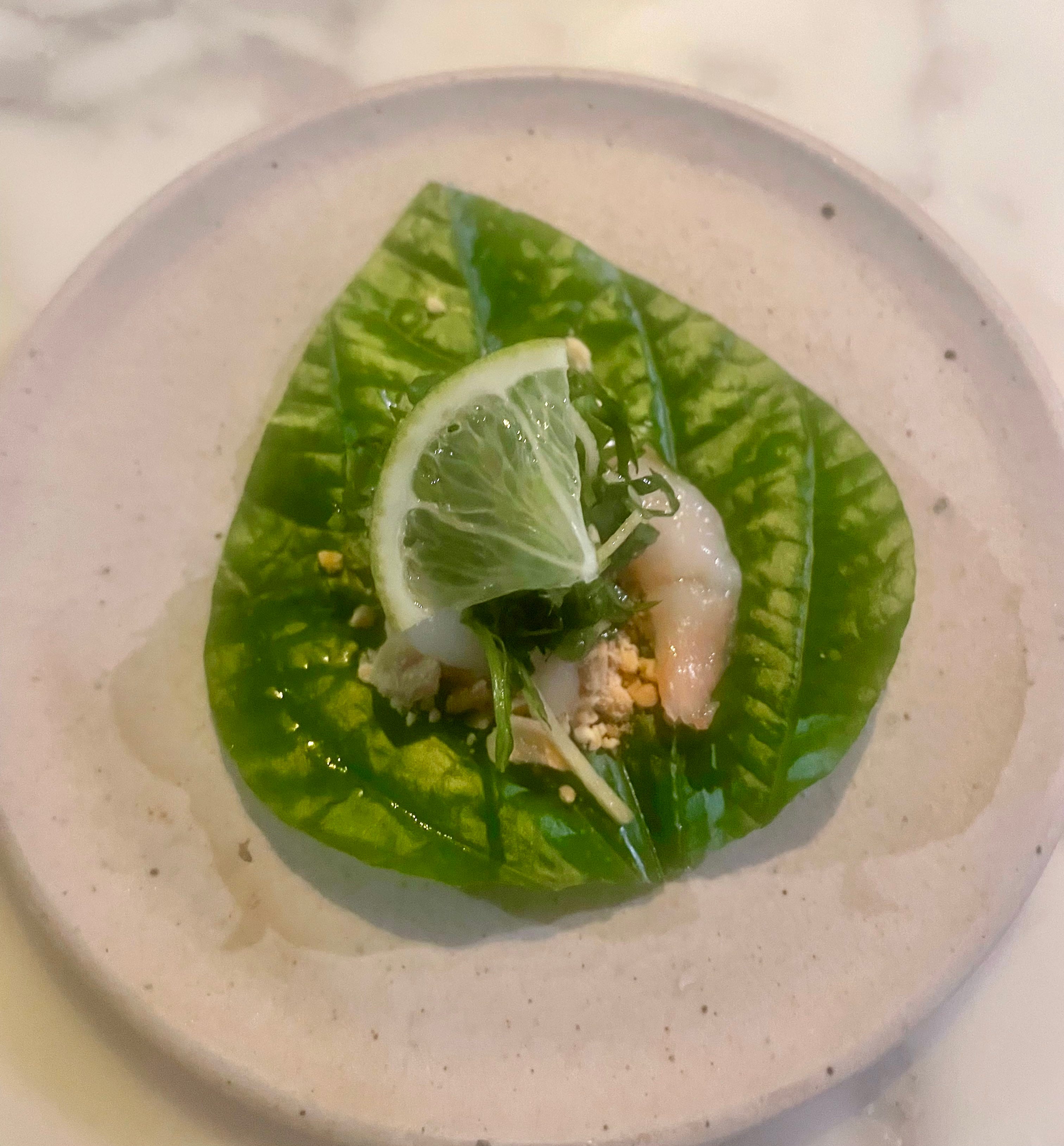
It was a single mouthful to chase away hours of jet lag, a betel leaf piled with prawn, green chilli, nahm jim dipping sauce, peanuts and lime: pow! Spicy, sharp, kaleidoscopic. Twenty-four hours after arrival in Melbourne, the dazzling modern-Thai flavours of Longrain perked me up. It’s a reaction appropriate to Australia’s food capital, though how that culinary scene got here is more complicated.
I was at the start of a four-week journey through Australia and New Zealand. And while I’m spending the majority of my time in the latter, on assignment in wine regions as well as trekking with my son and catching up with old friends, I couldn’t miss Melbourne, both for its food and for the important wine regions on its doorstep.
Melbourne today is an exploding multicultural city of five and half million souls. All of my taxi drivers have been Indian; you hear Chinese everywhere; it is the third-largest Greek city on the planet. And the city’s vibrant food scene is largely a result of immigration.
Sixty years ago, Melbourne was still a fairly parochial place. Although non-Anglo immigrants arrived from the nineteenth century, until the 1950s this remained culturally an essentially British city; its meat-and-two-veg food reflected that. But then the period from the late 1940 to the 60s saw a wave of immigration from Italy, Lebanon and above all Greece – 160,000 Greeks arrived in the post-war years. And in 1954, Italian brothers Leo and Vildo Pellegrini opened Pellegrini’s Espresso Bar on Bourke St: I stopped by for a flat white on the red vinyl stools in its mirrored, resolutely 1950s interior.
From the start of the twentieth century, the racist “White Australia” immigration policy had severely restricted Asian arrivals; it was loosened in the 1960s and finally abolished in 1973. Thus the second wave of immigration began in the 1970s, from China, Vietnam, India and elsewhere in Asia. Yet it took a while for those influences to change Melbourne cuisine. In an earlier career, Yeringberg’s owner and winemaker Sandra de Pury worked as a chef: she says that when she trained here in the 1980s, the city’s fine dining was still all about nouvelle cuisine, looking back to Europe rather than out to the Pacific.
But by the 1990s, the “modern Australian” style had started to emerge, absorbing east-Asian Pacific influences especially. And then from early this century, as restaurant work came to be seen as a serious career choice, there has been a so-called “third wave” of restaurateurs, chefs and sommeliers migrating here from all over the world for Melbourne’s food culture – and deepening it further.
Asian fusion has been the focus of a number of standard-bearers of this new era, such as Chris Lucas’s Chin Chin (2011 – south east Asian) and Andrew McConnell’s Supernormal (2014). More widely there is a strong emphasis on local and even hyper-local produce, and on local seafood. Sydney chef Josh Niland, with his gospel of nose-to-tail fish butchery, has been influential. Tasting menus are everywhere. And service is utterly flawless: noticeably superior to London, let alone Paris.
I was blown away by Supernormal, McConnell’s restaurant incorporating Chinese, Japanese and Korean flavours. Yet this is a mature fusion cuisine: it has ended up in a very different place than any of its component influences. Hence subtle, dazzlingly fresh dishes such as smoked tuna and mussels with shishito peppers, cos heart, watercress and bonito, or Saltwater duck sliced with pickled peaches, mustard oil and apple vinegar. At the same restaurateur’s more casual Cumulus Inc, co-owned by Yarra winemaker Jayden Ong, there’s a similar maturity of flavours, such as tuna tartare with goats curd, green peas and mint, or heritage cucumber with smoked labneh and pistachio dukkah.
As the latter dish suggests, Melbourne’s middle-eastern culinary heritage remains important alongside east Asian influences. One of last year’s most lauded new restaurants was Zareh, modern Armenian-Lebanese, following up on the long-running success of Rumi, with its fresh re-interpretation Lebanese cuisine. Meanwhile modern Indian cuisine also, paradoxically, more influential here than in Britain, perhaps unhobbled by takeaway expectations.
However, wine is also central to Melbourne’s food and drink culture. The state of Victoria’s wine regions fan out from the city: both the Mornington Peninsula and the Yarra Valley are just an hour’s drive from the centre, even closer to its sprawling suburbs. These are Australia’s two most important cool-climate regions, Mornington with a maritime climate and the Yarra more Mediterranean, though the upper valley is higher and noticeably cooler.


This climate is thanks to Melbourne’s position on Australia’s south-eastern tip, the most southerly point on the mainland, on a latitude around 300 kilometres south of the Barossa Valley to the west. What’s more, Melbourne sits on the southern Indian ocean: apart from Tasmania, there’s nothing much between it and the Antarctic, and that huge body of cold water cools the zone inland as far as the Great Dividing Range. Indeed Australia’s coldest wine region is the Macedon Ranges, 60 km north of the city: this week I drank a Pinot Noir grown at a chilly altitude there of 720 metres (2,400 feet).
The Yarra was Melbourne’s first wine region, growing up in the mid-nineteenth century to slake the thirst of the 1850s gold rush. But Yarra farmers later turned to dairy and the last vintage of the era was 1921. Then from the late 1960s, a few middle-class wine lovers, a number of them medics, started planting vines again. The same thing happened in the Mornington Peninsula from the late 1970s, as the city started to develop a wine culture – like its coffee obsession, in part an adoption of Mediterranean immigrants’ tastes. Then in the 1980s, the Yarra wine industry exploded, aided by tax incentives and by the arrival of Champagne giant Moët & Chandon in 1986 with its Chandon Australia venture.
Today, wine tourism is an integral part of the Melbourne foodie scene. The Yarra gets 10,000 tourists every weekend, while weddings at wineries are big business. As Levantine Hill’s Ewan Proctor says, there is a shortage of hotel rooms – one reason why his winery is constructing a new 33-room luxury hotel on site. In the lower Yarra and in Mornington, most wineries have cellar door operations, some with ravishing views, as at Port Phillip Estate. They often also boast excellent restaurants. Cellar doors have become an important part of these wineries’ business: at Soumah, for example, 60 per cent of their sales are either cellar door or direct to consumer online.
Both the Yarra and Mornington are best known for Pinot Noir and Chardonnay. As Richard McIntyre at Moorooduc Estate told me, “we think we’re making the best pinots we’ve ever made.” The regions produce a range of styles: in the Yarra and especially the upper Yarra, the Pinot Noirs are fresh, light and pretty, while some from Mornington, like Moorooduc’s, have a little more weight and savoury character. As for the Chardonnays, many from both the Yarra and Mornington – as elsewhere in Australia – have moved towards a quite Chablis-like, lean, linear style over the past 20 years – though richer styles are still in evidence too.
Yet as Yeringberg’s de Pury cautions, “There’s a bit of a myth that the Yarra’s all about Pinot and Chardonnay.” The region has long grown other grapes too, such as Yeringberg’s Roussanne and Marsanne (see below). And now, with the climate change showing in warmer, hotter summers in the Yarra – and in more unsettled weather and smaller harvests in Mornington – many growers are looking at grapes better suited to higher temperatures and water stress.
“Gamay is going into be massive,” says Steve Webber, longtime winemaker at big multi-regional firm De Bortoli and mentor to a whole generation of winemakers. “Grenache is pretty exciting.” He is also planting Pinot Noir higher, in the upper Yarra, and selecting Pinot and Chardonnay clones better suited to the region. Like other growers throughout the Yarra, he is also replanting to replace vines stricken by the deadly vine disease phylloxera, a presence here for 20 years now. Meanwhile other growers are planting Italian varieties such as Barbera, Nebbiolo and even Marzemino.
This diversity – and that of the Victoria wine zones further out from Melbourne, such as Heathcote and Beechwood – is reflected in the city’s fascinating restaurant wine lists, which juxtapose Australian and European wines in ways that can still be surprising to a British diner. Their logic is flavour rather than country or region: so on a by-the-glass list you might see a Fiano from Heathcote, Victoria next to a South African Rousanne and a Hungarian Furmint.
There’s an embarrassment of riches at the city’s wine bars too, such as cosy, natural-leaning Embla, or the even more natural-wine-dominated Bar Liberty (both also function as well-loved restaurants). And I stopped by the older-school City Wine Shop for a glass of Luke Lambert’s “Crudo” Yarra Shiraz and to admire the huge selection of Australian bottles.
I wish I’d had much, much longer to explore Melbourne’s food: I hardly even scratched the surface. I’ll have to return: and at this rate of innovation, who knows where its food and wines will have evolved in a few years’ time? It’s an exciting prospect.
Wines to try from around Melbourne
Kooyong Faultline Chardonnay 2023, Mornington Peninsula – many modern Aussie Chardonnays are brilliantly executed in a leaner style, but personally I prefer a touch more richness. This one from a single block at Kooyong, part of the Port Phillip Estate, is pale and light, with beautifully expressive fruit and just a touch more oak than most these days. Serious stuff (the 2023 isn’t in the UK yet but earlier vintages at All About Wine, Vinum, Lay & Wheeler, £38.99.)
Ten Minutes by Tractor McCutcheon Vineyard Chardonnay 2024, Mornington Peninsula – a weightier Chardonnay, made in oak barrels of which 30 per cent were new: more concentration, long, yet still beautifully balanced. Serious Côte d’Or-style Chardonnay, albeit still unmistakeably Aussie (the 2024 isn’t in the UK yet but the 2022 is at London End Wines, Vinum, from £57; other vintages available elsewhere in sixes.)
Yeringberg Marsanne Roussanne 2023, Yarra Valley – Sandra de Pury makes this unusual wine from the oldest Roussanne vines in the country, plus Marsanne, but the result isn’t quite like anything from the grapes’ native Rhône: a deep gold colour, impressive weight and texture but nicely balanced. Needs food. This wine ages impressively to become deeper and more complex – I was wowed by the 2014 (Woodwinters have the 2019, £30.)
Moorooduc Estate Robinson Vineyard Pinot Noir 2025, Mornington Peninsula – I love Kate McIntyre’s Pinot Noirs at Moorooduc, made to give them a little more weight and tannin than many in the region. This boasts bright but rounded red fruit with savoury notes in a very Burgundian style. Just beautiful (the 2025 isn’t in the UK yet but earlier vintages are available at NY Wines, Caviste, Woodwinters and elsewhere, from £34.95.)
Soumah Hexham Pinot Noir 2024, Yarra Valley – from a single vineyard using three different Pinot Noir clones, this has herbal and savoury notes, elegant and long – really good (the 2024 isn’t in the UK yet but the 2023 is available at All About Wine, ND John Wine Merchants, NY Wines, from £21.99.)
De Bortoli PHI Grenache Amphora Freeman’s Bridge 2022, Heathcote – De Bortoli’s veteran winemaker Steve Webber is always trying new ideas. He predicts a bright future for Grenache, and this one from Heathcote, a warmer zone north of Melbourne, is a real surprise. It sees no oak, instead fermented in clay amphorae, and the style is much close to new-wave Spanish Grenache styles: fresh, elegant, spicy, long – and it doesn’t taste anything like its 14.5 per cent ABV (Cork of the North, £31.50.)
I’m delighted to report that my book with Jane Masters MW, Rooted in Change: The Stories Behind Sustainable Wine, has just won the John Avery Award (a special award for an outstanding drinks book at the 2025 André Simon food and drink book awards).
Check out my new podcast with my friend and Daily Telegraph wine critic, Victoria Moore, Get Yourself a Glass. In the new episode that’s just about to drop, we answer burning wine questions from listeners, such as how can you tell if a wine is corked – and even if you can, should you mention it? And I talk about my Australian wine travels: on Spotify, Apple or wherever you get your podcasts.
Transparency declaration: I visited all the wine producers mentioned as their guest. Wine Victoria paid my accommodation costs while on the road.